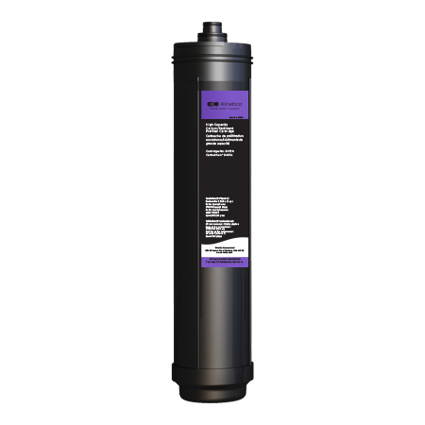

Sediment is made up of soil particles that have been detached from the land by a process called erosion, making it commonly found in our water sources. Chlorine is used when treating municipal water supplies to clean and target contaminants and biological pollutants that can be found in source water like lakes, rivers, and streams.
Special Notice: Replacement cartridges purchased online (Amazon or other retailers) are not approved or certified for use with Kinetico products, may not perform to specifications, and their use will void your product warranty.

Sediment is made up of soil particles that have been detached from the land by a process called erosion. Typically, water is the primary cause of erosion, and sediment is often dislodged by rainwater and transported by stormwater runoff. Sediment can range in size from small, pea-sized gravel to tiny soil particles, less than 2 millimeters in diameter, and is present in both native soil and some materials used for building unpaved roads, driveways, and farm lanes. Consequently, the source of sediment can be from bare soil from construction sites or farm fields, poorly maintained dirt and gravel roads, or degrading stream banks. Any soil that is not protected from rainfall or runoff may be vulnerable to erosion and become a source of sediment pollution. Raindrops that fall from the sky have enough force to dislodge soil particles from uncovered soil. Rain that is not absorbed into the ground becomes stormwater runoff and flows downhill, building momentum and picking up unprotected sediment until it reaches a waterway such as a stream, river, lake, or pond.
For decades, chlorine has been used in municipal water treatment as a disinfectant to kill harmful bacteria in water and the lines that carry it to your home. With the addition of chlorine to drinking water, we have seen a decrease in waterborne illnesses. Water treatment plants and systems have found chlorine essential for disinfecting water, and it is especially needed to keep water safe in the water distribution system, but once the water is in your home, chlorine is no longer necessary.
Chlorine levels in your home’s water supply should be safe for consumption since water is regulated by the US EPA with set maximum contaminant levels that the municipal water companies must maintain. Recently, more and more people are understanding the downsides of having water in their home that contains chlorine or chloramines and are interested in a water filtration system to significantly reduce chlorine or chloramine levels in their water.
The High-Capacity Carbon/Sediment Prefilter reduces the excess levels of chlorine that are left over in your water from municipal water treatment, while also working to reduce sediment levels as well.